Showing posts with label pulmonary embolism. Show all posts

Saturday, June 1, 2013

Navigating a Ship in Rough Waters: The Emotional Impact of Physical Illness

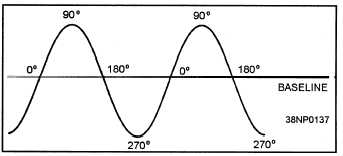
My mental state pictured in one convenient graph
For fun, let's take a look at a parenthetical slice of my life - say, the dates of 05.28.2013 to 06.01.2013, the present day. For many, any given five day period is mundane, but not unpleasant. Beds are slept in, meals are eaten, work is completed, fun is had, etc., etc. Hovering over the baseline of complacency is never a bad place to find oneself.


Prior to lunggunk, I would like to think that I established a pretty nice emotional baseline for myself. After the stress of being in a mental hospital had passed and I had once again become reacquainted with my routine, any point above or below my baseline was not a make-or-break event that would determine the overall climate of my day. If something unpleasant happened, I would brush it from my shoulder like I would a little ladybug who chose the wrong landing pad. If something good happened, I would bask in the happiness that a pleasant experience evokes and then return to the commonplace task with which I was previously engaged.  It was a relief to feel like a normal person again. And then...

....enter stage right (lung), my new best friend and bitterest enemy: BLOODCLOT.

The physical pain I have been experiencing has been documented in my previous posts. Right now, I want to get back to that parenthetical time period referenced above. Let's talk about 05.28.2013, my first day back to work after being off for approximately a week...

Consider the graph above, paying attention first to the baseline. On this particular morning, I awoke feeling indifferent. I groomed as much as necessary, ate my "breakfast" of anticoagulants and psychiatric medications, dressed, and began looking for my ID badge to complete my wardrobe. When I couldn't find it, it induced a state of panic that was disproportionate to the situation. In this game of pin-the-tail-on-the-donkey, a little point can be marked on the graph below the zero degree baseline.

If misplacing a plastic badge can provoke my generalized anxiety enough to produce a panic attack, you, dear reader, can only imagine how a more "serious" event would make me feel like I was mired in quicksand, sinking into a whirlpool of anxiety that would require more than an ativan to free me. This five day period has been full of these moments - my moods have been cycling so rapidly and unpredictably that I am unsure how I will be feeling five minutes from now.

The pulmonary embolism diagnosis was completely out of the blue. I'm sure that my preexisting anxiety problems do not "help" the situation, but this experience has rendered me largely incapable of controlling my emotional responses to both positive and negative stimuli. I am now hyper-aware of my own mortality. Because of this, all of my emotions have become more intense.

My baseline has been re-calibrated. When it was previously complacency/indifference it is now stress/anxiety. I either feel positive stress (excitement, elation, etc.) or negative stress (impotence, incompetence, etc.).

I pine for peace. Indifference used to be odious to me - now I would welcome it with open arms. Eventually, my physical problems will pass and I'm sure I will feel "normal" again. As for now, I have to navigate these rough emotional waves the best I can.

***

When I was a child, there was a chinchilla for sale in a local pet store. A warning sign was placed on his cage imploring the shoppers to not "poke, prod or blow on" the little rodent because, presumably, his moods were unstable. Recently, I have been thinking about this chinchilla and feeling sympathy for him. I hope he found a good home.

Tuesday, May 28, 2013

Hopeful Hopelessness

This is actually what I looked like at my desk today.
If I live to be exactly 82 years old, I will have survived 29,951 days. Really, every day does matter but if you consider one day out of almost 30,000, it is pretty inconsequential.

Today was not a Good Day.

Instead of outlining all of the insignificant facts that made this a Bad Day, I will talk about why I have recently been having more Bad Days than Good.

Since I am being exact with my calculations, I lost my husband to suicide 628 days ago (see my earlier post). Since that time, I have navigated the aftermath of his death (planning a funeral, buying an urn, finding ways to honor his memory), changed offices at my job three times, started dating someone, broke up with said someone, was admitted to a mental hospital, and then was diagnosed with a pulmonary embolism.

Through all of these things, I was able to convince myself that life was still "okay." Until the pulmonary embolism.

When Ben died, I believed that my life was over, too. However, by finding ways to honor his memory, I love him more than ever and feel more happiness than sadness when I think of him. I don't need to talk about what an amazing person he was - anyone who knew him is aware of that. Anyone who ever saw us together understands how deep my love was for him. Nothing else needs to be said.

The pulmonary embolism diagnosis literally almost killed me. I am sitting at my computer typing because of sheer luck. Perhaps if the wind was blowing a different way that day, I would not have been so lucky. After being released from the hospital, I care so much less about things that should matter to me: work, relationships, even my own well-being. I suppose facing one's own mortality will elicit such a reaction. However, these feelings are distinctly NOT ME.

It frightens me how little I care. It frightens me that a future that was once bright and full of hope is now a black hole of negative energy. It's almost as if my life stopped that day in the ER when the doctor looked at me with a stony expression and explained that I have a clot in my lung. Being in the hospital was novel but, when I was released, I felt like I was swimming in dark waters without a life preserver.

The lights could have gone out and not come back on.

I plow through and do what is expected of me. I don't enjoy it. Mostly, I feel angered and annoyed. I am not such a fool to believe that anything is beyond hope but hope is just beyond my reach.

Through whatever tears I am unable to hold back, I remind myself that everything is temporary. My mood is temporary, my health problems are temporary, life is temporary. Today was bad, tomorrow may be great. Even my present exasperation cannot prevent me from believing in the future. By nature, I am a positive person. Even if tomorrow is bad, there is the next day. Or the next.

If all else fails, I will blame my anguish on my unexpectedly bad menstrual cycles. Hormones, hormones, hormones, cry, cry, cry.


Tuesday, May 21, 2013

Pulmonary Embolism Recovery: To ER or not to ER?

I want to rub his head for good luck. (That's what she said).
Surpassing "what is the meaning of life?" the above question has become the most profound and frequently asked by my little spark of consciousness over the last few weeks. Based on things I have heard from other pulmonary embolism survivors, this seems to be a common dilemma. So what is answer?

I haven't a clue.

When I was discharged from the ICU on 04.30.2013, I was thrown into an entirely new world in which every ache, pain, bruise, tickle, cramp, and flutter is a potentially fatal symptom that deserves immediate attention. As any anxiety-sufferer/hypochondriac will tell you, even the most seemingly insignificant unexpected bodily responses are symptoms of a disease that is murdering you from the inside out.

Even "well-adjusted" people who have suffered a pulmonary embolism rarely escape the experience psychologically unscathed. Trauma is trauma - some are better equipped to handle it than others, but it still leaves an imprint on one's mind. Anxiety is a totally normal response to an event that almost caused your demise.

So, to get back to the question - when should you go to the ER? I haven't found a good answer to this problem yet. However, the more I learn about my condition and my body, in general, I feel that I have become a better listener to my internal processes. I am becoming accustomed to the chest pain, fatigue, and shortness of breath. Over the past three weeks, I have paid close attention to the nature and duration of my pain. Deviations from the norm would be one factor that would invite me to consider the emergency room. Any new and troubling symptoms will probably prompt me to go without too much hesitation.

During my last ER visit, which turned out to be an intense flare up of my existing PE symptoms, the nurse told me that, even though they did not discover any new clots, it is never a bad idea to go to the ER when you are experiencing shortness of breath and chest pain. The fact that she said that made me feel much more at ease. I do not want to be the girl who cried wolf, but, I have decided that is better to be safe than sorry.

Also, it's not a bad idea to have a list of phone numbers you can call to ask for advice before you decide to take the ER plunge. For example, if my problems are related to medication side-effects, I will call my pharmacist. If the symptoms involve chest pain or shortness of breath, I call the nurse at my doctor's office or the NurseLine through my health insurance. These have all been effective tools to make the decision easier.

I am still figuring all of this out and will probably never develop a 100% effective formula. I am learning to trust and listen to my body and, at this point, I think this is the best thing I can do for myself.

If there are any other PE survivors out there reading this, how do you make this determination? What prompts you to go to the ER? Or what helps you calm down enough to feel like you can treat your symptoms at home?

Monday, May 20, 2013

Migraines, Birth Control, and DVT

Attention, ladypals! This article suggests a correlation between migraines (especially migraines with aura), hormonal birth control, and an increased risk of thrombotic events.

This is a friendly PSA to be aware of the symptoms of DVT & PE.


scary!

Sunday, May 19, 2013

Knowledge is Power!

Mine looked a lot like this, minus the arrow.
According to a bill I received in the mail, I was in the cardiac ICU for the duration of my stay in the hospital. This was news to me. Thankfully, I was not aware of this fact while I was there because I certainly would have freaked the eff out. Of course, the only time I was in the hospital (for non-crazy problems, lol), I would end up in the ICU. Knowledge is power, but sometimes, knowledge after the fact is preferable.

Oh, BTW, the bill is 30k and counting. Thanks Obama!

Thursday, May 16, 2013

This is my blog and I will cry if I want to

HA HA!
Dammit, Life! Yesterday was so good! I even went to bed with a smile on my face. Why do you mistreat me so? 

It is almost comical when the stars align with such precision that every possible thing that could go wrong will go wrong and at exactly the same time. My day started with so much chest pain that I had to call the doctor to reschedule my appointment. Isn't that funny? I was going to see the doctor about my chest pain but my chest pain prevented me from going. Hee, hee, hee. 

I didn't even get to have my coffee yet before I began to roll my sisyphean bolder of anxiety up and down and up and down the imaginary mountains that exist in my brain. 

We all knows what happens when too much anxiety is combined with Pulmonary Embolism injuries - TROUBLE BREATHING! After a cute little bout of hyperventilation, I collapsed, exhausted, on the floor causing a very nice bruise on my very sore ass. (Well, it was more like my outer thigh, but I wanted to use a swear). 

All of these events were so absurd to me that I could do nothing but laugh. And then I started thinking about all of the minor annoyances that one encounters in day-to-day life, and felt pretty lucky I don't currently have an ingrown toenail. (Seriously, that shit would probably push me over the edge by this point). 

An appropriate response to a passive aggressive letter

Here is a list of mildly annoying things that did not happen to me today:


  • A bird did not poop on my head
  • The cats did not vomit in the bathtub again, bless their little hearts
  • I did not receive one passive aggressive email today
  • Nobody carved the word "ASS" into the hood of my car
  • My professionalism was not insulted by men who think it is appropriate to address colleagues as "dear" or "honey" when you are saying something they don't agree with
  • I did not find any severed digits in my Campbell's vegetable soup
  • All urine and fecal matter made it into the toilet, where it belongs
  • NO PAPERCUTS
So it wasn't all bad. Hopefully the universe is not spying on me to make all of my nonexistent mild annoyances come true!

Tomorrow's episode: Is an ER visit in our protagonist's future? Or can she finally make it through a week without having to take a trip to the hospital? Stay tuned! 


Tuesday, May 14, 2013

What is an Anxiety?

So, it's ok if I am vomiting bile?
I have been the proud owner of an anxiety problem since I was old enough to think abstractly. Those cyclical thoughts - "I need money, I don't have money, I need money" - have been a good friend of mine since I've been on my own. When I was a kid, it was probably more like - "I want a Milky Way Bar, I don't have a Milky Way Bar, I need a Milky Way Bar."

Anxiety over money is easy to talk yourself out of.

1) I have none.
2) I am not a stone.
3) Even if I were, you couldn't squeeze coins, blood, water, mucus, etc. out of me.
4) If all else fails, a good "go fuck yourself" works quite well.
5) If you really need money or whatever, I will trade you my three goats for six months of deferment. My goats produce the best cheese, I am not lying.

Health anxiety is an entirely different animal (please read this sentence in a Sean Connery accent). You can beg, plead, cry, offer sexual favors, etc. but your condition is really up to the gods. My tongue is made of silver and I have been able to talk myself out of every major problem I have ever had, except this one.

The fact that I have to deal with some type of object in my lung that is completely unwelcome is five degrees above stressful. There is something inside of me over which I have no control. Anyone who knows me understands that I am a control freak and I would remove the offending substance with my own hands, if  I could. This is not possible without blooding my nicest outfit. And as of now, my nicest outfit is my only outfit because I have neglected laundry chores.

The point is that I freak out, start having trouble breathing, start having chest pain, and then everything becomes worse because of anxiety. Anyone who doesn't believe that anxiety is real needs to listen to my heart rate at 140bmp when I am resting. Perhaps then they would believe it. Anyway, this cycle continues until I can control my stress.

How do I do this?

Ativan. God bless the Ativan.

Sunday, May 12, 2013

A Day in the Life

Tea, anyone?
Have you ever wondered what a week in the life of a pulmonary embolism survivor is like? Oh, you have? Great! I will tell you!

***
Thursday, May 2nd: Went to my first appointment with my brand-new primary care provider and did not like her at all. This is mostly due to her hands off approach and the fact that she does not want to see me again until AUGUST. If I am having difficulty breathing and chest pain on a daily basis, it would be nice to at least pretend that I have access to a doctor who will take my concerns seriously. Hmmph. During this appointment, though, my warfairn was increased to 10mg/day and I was told to continue the twice daily Lovenox injections.

Friday, May 3rd: Said shortness of breath, chest pain and dizziness prompted me to take a return trip to the ER in an ambulance. What was the main problem, you ask? Dehydration. Whoops! Who would have thought that I actually need to drink water? The good news: a chest x-ray showed (read my lips) NO NEW CLOTS!

Saturday, May 4th & Sunday, May 5th: I don't really remember either of these two days. I'm guessing they consisted of more chest pain, naps, crappy TV, pajamas, and probably pizza. Actually, knowing me, definitely pizza.

Monday, May 6th: This was my first day back to work after being in the hospital! But first, I had to go to the lab to have my blood drawn. By this point, needles have become old hat to me. After being poked and prodded, I was off to my office like a good little worker bee. Going back to work was a positive step for me  - it provided some normalcy after one of the craziest weeks of my life. Plus, I love my job so I was glad to be back.

Tuesday, May 7th: The nurse from my PCP's office called with the results of my INR. It was in a therapeutic range so I was told to discontinue the Lovenox injections (yay!) and decrease my warfarin to 7mg/day. I also spoke with the nurse regarding my concerns about pain management and she indicated that the doctor didn't really specify in my chart what I am to do. Grrrr. Daily chest pain is scary, especially for a hypochondriac such as myself. Don't they get that?!?

In an interesting turn of events, when I examined my bottle of warfairn I had filled at my local Rite Aid, I noticed that the dosing instructions were incorrect. As such, I had been taking 1/2 of the dose that was prescribed to me by my doctor. I contacted the pharmacy, they admitted their mistake and apologized for any "inconvenience." It certainly would have been an inconvenience if I developed more clots and dropped dead! I still need to write a few angry letters to anyone who is masochistic enough to listen to me.

Wednesday, May 8th: More chest pain, more anxiety. At this point, I am at a loss of what to do because my PCP does not seem concerned but I feel like I am having a heart attack. I decided to do what I do best: nothing.

Thursday, May 9th: After I finish my workday, where did I find myself? Back at the ER, of course! I was having so much trouble breathing that I thought I was going to die. Plus, Creeps really wanted to visit the hospital cafeteria again. The food really grew on him.

I really can't say enough good stuff about the ED staff at Allegheny General Hospital. They are thorough, understanding, and compassionate. No matter what your medical history is, chest pain and shortness of breath are terrifying things. Just knowing that I was in such capable hands calmed my nerves considerably.

The "normal" test were performed: EKG, blood work, chest x-ray. Fortunately, the results were all good and my INR was still in an appropriate range. The doctor explained that, because of the significant damage to my lung, my recovery will take at least a few weeks. During that time, I can expect a degree of pain and difficulty breathing. Anxiety, he said, will only make it worse because panic attacks can mimic the symptoms of a PE. It's like a vicious cycle - my chest will start hurting, I will freak out, then I will have trouble breathing, and freak out some more. The more I freak out, the worse the symptoms will be.

He suggested that I keep my anxiety under control by taking Ativan when I start to have symptoms. He also prescribed pain medication. These two meds have worked wonders at keeping anxiety and pain at bay. Sometimes, all you really need is an understanding physician who expresses genuine concern for your symptoms.

Friday, May 10th - Sunday, May 12th: I've been following the recommendations of the ER doctor and have been able to effectively manage the pain and anxiety associated with it. I'm still not feeling great, but now I feel like I have the tools to deal with my symptoms. Also, I bought ice cream and cookies at the store. Ice cream will cure anything that ails you.

***

After a cycle of naps, meds, ice cream, more naps, another dose of meds, and a cookie supper, I will be ready to tackle anything that is thrown at me next week! 

Saturday, May 11, 2013

The Wild and Wonderful World of Anticoagulants


I am thirty years old and my bedside table looks like a pharmacy at a retirement community. Every morning, I take about 10 pills for various ailments. Because I typically chase these little goodies with strong, black coffee, I lovingly refer to the combination as my breakfast. According to the box, Cheerios can promote heart health but I would rather rely on my blood-thinners for that task. In case anyone is curious, I am going to tell you about the various substances I have been putting in my body to prevent an untimely death.

Heparin

Heparin was my very first anticoagulant. (Awwwwww, how precious). This was given to me in the hospital via an IV almost immediately after the doctors discovered my pulmonary embolism. I was on a constant drip for 24 hours until my INR was at a therapeutic level. 

INR = International Normalized Ratio. After a person is diagnosed with a clotting disorder and is put on anticoagulants, the INR is checked frequently until it is stable. It is indicative of the blood's tendency to clot and is used to measure warfarin dosage. In my case, I am still getting weekly blood tests as my dosage of anticoagulants is being fine-tuned.

Lovenox

After Heparin was discontinued, I was placed on Lovenox injections twice daily. These continued until I was on warfarin, an oral medication, long enough for it to be effective. Lovenox injections are administered subcutaneously, typically in the belly or any other area where there is some extra chub. My first injection was given to me by a nurse in the hospital, but they instructed me on how to do it myself so I could continue them at home. I'm not really afraid of needles, plus the poker on this is a very fine gauge, so there was minimal pain with insertion. However, after a week of shots, there are enough bruises on my belly to resemble a large galaxy. It would be pretty if it wasn't so painful. 

Warfarin

Warfarin is probably the most commonly used drug in the treatment of deep vein thrombosis and pulmonary emboli. Like Heparin and Lovenox, it is an anticoagulant but it is taken orally (yay!). I started warfarin after Heparin was discontinued and used it in conjunction with Lovenox until my INR was stable enough to be considered therapeutic. At first I was on 4mg, then 10mg, and now 7mg. This may change when I have my next round of blood tests. My physician anticipates that I will be on this medication for 4-6 months, unless it is discovered that I am genetically predisposed to a clotting disorder. In that case, I will likely remain on it the rest of my life. 

One strange thing about warfarin is that it interacts with leafy, green vegetables that are high in vitamin K. Since I hate vegetables, this is good news for me because I now have a valid excuse to skip the salad. 

There are some pretty serious side effects associated with this medication, the most serious being an increased risk of bleeding. Upon my discharge from the hospital, I was instructed to go back if I fell or was injured in any other way because of the chance of internal bleeding. This worries me because I am clumsy and accident-prone. Plus I have cats who like to scratch the shit out of me in the middle of the night. The last thing I need is to wake up covered in cats and blood. It's stressful enough to have to wake up to the cats as it is. 

A less serious side effect that I have noticed is fatigue. I'm sure that the excessive tiredness I have been feeling is at least partially related to having a lung injury but it is probably largely due to medication. Again, this is one thing that I don't exactly mind because I have an excuse to sleep all day. Who doesn't want to sleep all day? 

***

For at least the next few months, anticoagulants are going to be my new best friend. It's always a good thing to keep the kind of company that will save your life. 

I just found the clotboard

I am so happy


Wednesday, May 8, 2013

The Importance of Being Earnest


When I am not thinking of blood clots, I am most certainly thinking of word games. Or pizza.
Semantic satiation is a thing. I have used the word "clot" so many times over the last two weeks, that it has virtually lost all meaning. Clot. Clot. Clot. C-L-O-T. After awhile, it starts to sound like a dirty word, tee hee hee. 

Semantic satiation aside, words are powerful things. They are like tiny fists delivered in chirpy, nasal tones. . Words can make you question your beliefs. Words can elucidate ideas that you would prefer to remain muddy. 

When I first started experiencing calf pain, I chose to ignore it. If I refuse to acknowledge it, it's not there, right? It only became serious in my mind when my bff, Creeps, sat me down and told me (in a much nicer way) that I was being an irresponsible idiot for denying something so obvious. That was what prompted me to go to the hospital. (Thank you, Creeps, for saving my life. Let me buy you a coffee sometime for your trouble). 

Since my discharge, when asked, I have been open with the reason why I was hospitalized and missed a week of work. I have experienced the normal gamut of illnesses that affect most people - strep throat, influenza, painful diarrhea, etc. - and telling someone about those ailments elicits an entirely different reaction than telling someone about a pulmonary embolism.

Non-lethal ailment: "Oh, you have strep throat. That must suck. Drink OJ and get lots of rest!"
Pulmonary embolism: "Holy shit, I am glad you are standing here talking to me right now." 

Ever since I received the diagnosis of PE, I was completely aware of the gravity of the situation. However, the reactions I have been receiving from friends and coworkers have made the whole experience more "real." (I mean, it was never fake, It just wasn't so scary that I felt like peeing my pants). 

Of course these responses trigger a panic response in my brain. However, it is never a bad thing to be reminded that you are lucky to be alive. On a very basic level, it is an amazing coincidence that I was ever born. Now that I am here, it is incredible that I survived something that has killed so many wonderful people. 

It is easy to feel pity for oneself. It is difficult, but more profound, to view negative experiences as a building block for one's future. I have learned a lot about myself from this experience and I fully intend to use this knowledge to make a better life for myself going forward. I encourage anyone who has gone through something scary or painful to try to view their situation in this light. Everything is a learning experience and we owe it to our fellow humans to be good teachers. 


Thursday, May 2, 2013

Super Important Business

Before I continue my personal saga, I wanted to explain how important it is to know the risk factors and warning signs of a developing blood clot.

THIS IS REALLY IMPORTANT.

 Because I am cocky and believe that I am invincible, I ignored very clear warning signs indicating that I had a clot in my leg. Had I not been such an idiot, my clot may not have broken off and lodged in my lung. In fact, the only reason I finally did go to the hospital was at the insistence of my good friend, Creeps, and that was only to shut him up. (Just kidding, Creeps! I <3 you!).

Please learn from my mistake and realize that THIS CAN HAPPEN TO YOU. It doesn't matter if you are young, old, active, sedentary, healthy, etc. Anyone can develop a potentially lethal blood clot.

DISCLAIMER: this is not medical advice. I'm just someone who wants to raise awareness for what many call a "silent killer."  If you believe you have a blood clot or pulmonary embolism, go to your local ER or call 911 immediately. DO NOT WAIT. The below lists are not a comprehensive review of every risk factor or symptom. Contact your physician for more detailed information.

These are common risk factors in the development of clots:

  • Recent surgery
  • A period of immobility (as in a hospital stay or prescribed bed rest)
  • Taking hormonal birth control pills
  • Long trips
  • Working a desk job or sitting for long period of time
  • Smoking cigarettes
  • Being overweight/obese
  • A family history of DVT
  • A previous DVT and/or Pulmonary Embolism

These are the symptoms of a DVT
  • Pain in your leg, ankle or foot. This pain can feel like a sprained/bruised muscle, but unlike a sprain/bruise, the pain will become worse over time and not better. 
  • Swelling. Compare your calves - does one appear to be larger than the other? Does one feel "tighter" than the other?
  • Redness. Often times, the skin above the DVT will become red. Sometimes the affected area may turn blue or be drained of color. Have you experienced any recent trauma to the affected area? If not, you may want to try to determine why your skin is changing color.
  • Warmth. Is the affected area warm to the touch? Even if it turns out not to be a clot, this is still something that should be reviewed with a physician.
These are the symptoms of a Pulmonary Embolism
  • Chest pain
  • Shortness of breath
  • Sweating
  • Fever
  • Anxiety/nervousness
  • Heart palpitations
  • A racing pulse
  • Cough, with or without blood
  • Collapse and sudden death. As scary as this is, some DVTs and PEs present no noticeable symptoms. 

The most important thing to remember is to listen to your body. If you feel there is something wrong, DON'T WAIT. GET IT CHECKED OUT. 

Don't listen to them. Dry shampoo DOES NOT work. 
In regards to my specific case, I had many factors working against me. I smoke (stupid), take hormonal birth control, and was hospitalized for a week during which time, I moved very little. Ladies, if you are like me, you probably just throw away that warning on your BC that says "smoking while taking this medication may cause blood clots." This girl here, the one over there on the right, is living (thankfully!) proof that BC + smoking do not mix. This makes me sad, because few things are more satisfying than a post-coital cigarette. But I digress...

When I began to develop symptoms (the tenderness & swelling in my leg were the first to materialize), it was easy to explain away as a sprain. The mild symptoms lasted approximately three days. However, when my calf started to turn red, warm, and  became extremely painful, it was harder to ignore. By Friday, I was limping. The PE symptoms appeared in the early afternoon on that fateful Friday. It started with a SHARP pain underneath my heart, transitioned to extreme dizziness, and then became severe shortness of breath. I'm either dedicated to my job or stupid, because I stayed until the end of my shift and then went to the hospital after work with the same sense of urgency with which I would return library books. 

The moral of the story is: Know the risk factors for clotting. Know the symptoms of DVT and PE. Share this information with everyone you know. And, please, please, please seek immediate medical attention if you think you may have a blood clot. If you ignore it, it becomes a ticking time bomb in your body that could kill you in an instant. 

Smile Mighty Jesus, Pulmonary Embolism's Got me Down

Oh, that giant needle is going into my arm? Cool!
When asked about their vision of hell, some people would certainly answer "an ER waiting room." It is difficult to argue against this one. Not only are you waiting. And waiting. And waiting. But then, you are waiting some more. However, Tom Petty was incorrect when he nasally crooned that waiting is the hardest part.

*******************
Open Letter to Tom Petty
Dear Tom Petty,
Contrary to what you believe, waiting is not always the hardest part. Sometimes the hardest part is watching someone vomit yellow bile into a clear ziploc bag. Other times, it is the necessity of touching surfaces you KNOW are contaminated with MRSA. Sometimes, it's listening to someone scream in pain as they are being poked and prodded. In conclusion, Tom Petty, waiting does suck but there are worse things out there.
*********
I digress.

After being taken back to an assessment room, the doctor spoke to me within 5 minutes. She listened to me, took my concerns seriously, and ordered blood tests to determine the D-dimer level in my blood, among other things. D-dimer is an anti-clotting substance found in your blood. If the levels are high, it suggests the possibility of blood clots. Before I was even notified of the results, I was taken for a CT scan with contrast to see if there were any clots in my lungs. After both of these tests, I waited. And waited again.

When the the doctor had the opportunity to review my results and began speaking to me in low tones, I knew she had bad news. She confirmed the presence of a clot (or clots) in my right leg, which I expected. This is called deep vein thrombosis (DVT). Then she dropped a bombshell: She also found a small blood clot in my right lung, which is called a pulmonary embolism. The process of the clot forming and then embolizing is called venous thromboembolism (VTE).

After I heard "blood clot in lung" I stopped listening and started crying. People DIE from this. People like my very own grandmother. Before I could rejoin the conversation about my course of treatment, I had to take a few moments to curse my terrible luck and (probable) genetic link to clotting disorders. Thankfully, the nurse was kind enough to give me an ativan so I could once again form complete thoughts....

To be continued...
(Next chapter: Treatment)


So what if I am limping so badly I can barely stand up? I'm cool, man.

Look at my swelling. I SAID LOOK AT IT!
In the middle of April, I was hospitalized for being crazy (completely different, yet hilarious story.) About a week after getting of the hospital, I started noticing pain in my leg that felt much like a strained muscle. It wasn't getting any better, it wasn't getting any worse so I chose to ignore it.

As anyone who has spent time in a mental institution can understand, a doctor's office is the second-to-last place I wanted to be (the first, of course, being the mental institution). Anyway, who goes to a doctor for a pulled muscle? They would probably laugh at me.

When you have a strained muscle, you expect the pain to diminish day-by-day until it is completely healed. With the leg pain I was experiencing, it was not getting worse but it was not getting better. During this time, it was suggested to me that I could possibly have a blood clot. Being the person I am, my response was something like, "meh, meh, meh, blah."This conversation continued over the next few days until I promised to go to an urgent care center after I ended work for the day.

It is terrifying to think of how close I came to being not-ok (aka dead).

On the afternoon before my promised doctor's visit, I experienced the scariest chest pain of my life. It was sharp, like a knife puncturing my chest cavity, and was terrifying, although it only lasted about 20 seconds. When I regained my senses, I realized I was very close to passing out and I was short of breath.

The funny thing about this is that I was carrying my lunch, which consisted of a greasy pepperoni roll, back to my office. I remember thinking, "of course I have to have a heart attack while I am carrying probably one of the most unhealthy lunches in the history of lunch." When I laughed at the joke I told myself in my head, I felt like I would be ok. One can't be amused while they are dying, right? Stupidly, I finished the rest of my shift at work but went to the emergency room immediately after.

EDIT: My bff, Creeps, who drug me (kicking and screaming) to the ER just reminded me that I wanted to go to dinner before going to the hospital. The pepperoni roll I ate during the day was being digested and my stomach wanted something else. Creeps compromised by buying me a bag of Sun Chips and a Coke from the hospital vending machine. 

And this is where my adventure begins....

TO BE CONTINUED